
What Fear Does to a Room
What do you believe about who counts?
What Holds Series – Part 6
The Storm That Came Back
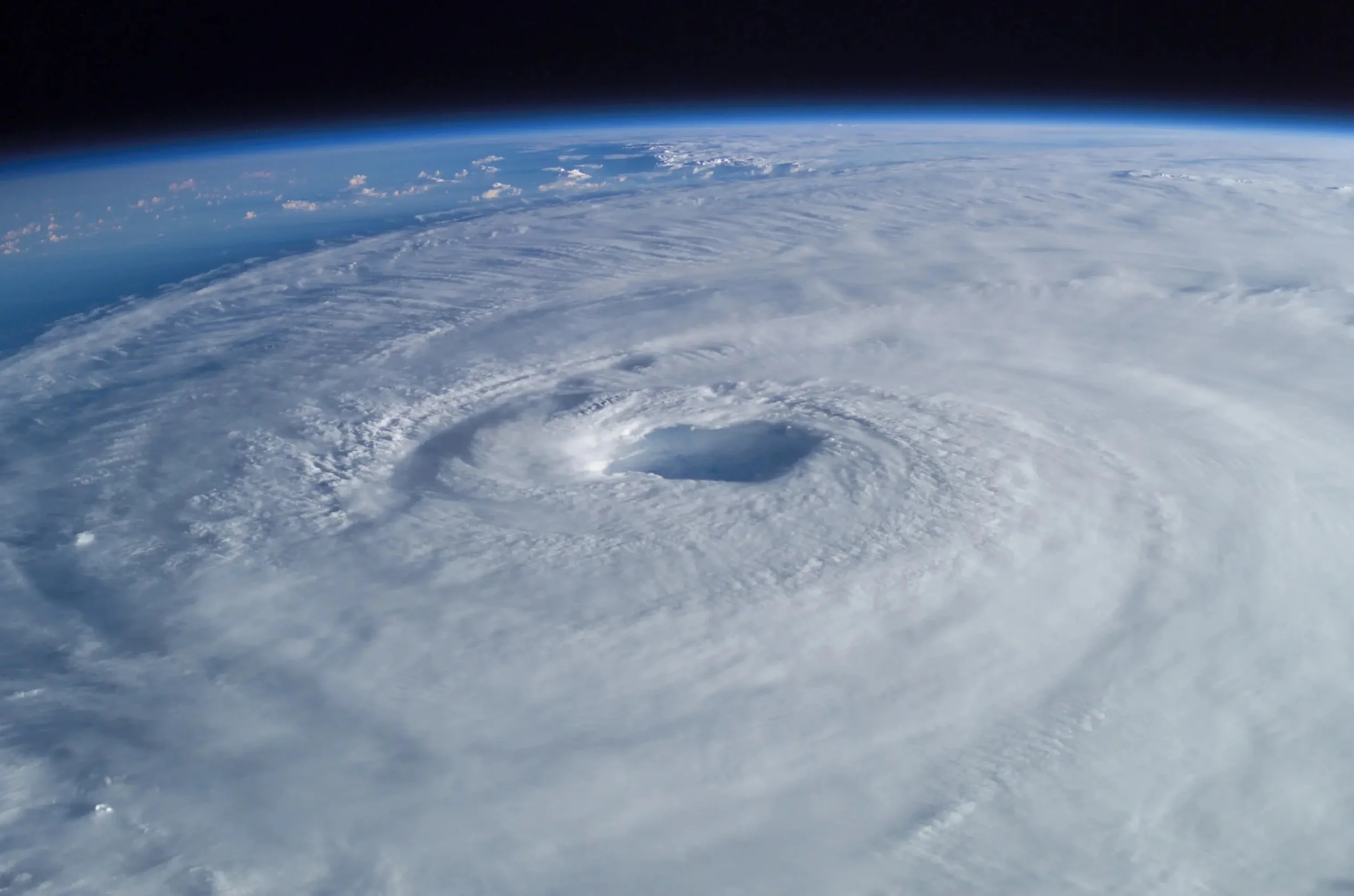
In the summer of 2004, Hurricane Frances was bearing down on Florida.
It was serious enough that the state issued the largest evacuation order in its history — nearly three million people told to leave their homes and get out. And then, before the full weight of that order had settled, the storm turned. The immediate threat eased. People exhaled.
And then Frances did a 270-degree turn and came back.
I want to stay with that image for a moment, because it captures something important about what fear actually does. Fear responds to perceived threat. When the threat appears to ease, fear eases with it — and then, when the threat returns from an unexpected direction, the fear that comes back is sharper and less manageable than the first wave. Because now you've been wrong once. Now you know you can't trust the forecast. Now the ground under your assumptions has shifted.
We had moved to Florida the year before. When we arrived, the locals waved off any concern about hurricanes with cheerful confidence: aww, we haven't been hit in thirty years. Our children were young — our oldest was nine, our youngest three. I had never been through a hurricane. I had no framework for what was coming.
What I watched in the days surrounding that evacuation — from inside my own considerable fear — was a study in what pressure does to people. And what I noticed was that the storm itself was not what determined how people responded. What determined it was the assumption each person was already carrying about what crisis means and who it's for.
What Fear Does
The first response was the one fear produces when it goes unexamined.
It looked like urgency that had curdled into something harder — people acquiring resources with both hands and no particular concern for what the person next to them might need. Gas stations with lines backed up for blocks. Hardware stores stripped of plywood and generators before half the community had gotten there. A calculation running just under the surface of every interaction: there is not enough, and I need to make sure I have mine.
I want to be precise about what I'm describing, because I don't think the people operating from that calculation were bad people. I think they were frightened people doing what frightened people do when they haven't decided in advance what they believe about scarcity. When you haven't asked yourself whether the pool is fixed — whether my getting enough necessarily means someone else doesn't — the fear makes the decision for you. And fear, left to its own devices, always answers that question the same way.
There is not enough. Get yours.
I understood that impulse completely. I was living inside a version of it. I had young children and a husband with military obligations that complicated everything, and a minivan to pack, and no experience with what was coming. The fear was real and it was reasonable and it was doing exactly what fear does — narrowing my aperture of concern to the people immediately in front of me.
What I didn't know yet was that Dave was running a completely different calculation.
What Dave and Nathan Did
Dave was stationed at the same installation as his friend and colleague Nathan. They faced the same impossible list: military aircraft to evacuate, unit obligations to fulfill, families to get out, homes to board up, and a closing window in which to do all of it. Every instinct the situation produced pointed toward the same response — divide and conquer, each family solving its own problem as fast as possible.
Nathan and Dave looked at the same situation and asked a different question.
What if we pooled everything?
What followed was nearly forty hours without sleep — two men working in concert rather than in parallel, identifying needs across both families and the unit, acquiring resources efficiently rather than duplicating effort, and then concentrating everything outward. They began not with their own homes but with the people around them who had the least. Jan, their elderly secretary, had no one to help her board up her home and no way to manage the preparation alone. She was first. Then Nathan's family. Then, last of all, their own.
I want to make sure that sequence lands clearly, because it is the most important detail in the story. Dave did not take care of his own first and then, from a place of surplus, extend generosity to others. He inverted the order entirely. Jan before Nathan. Nathan before us. Our home, the home where his wife and four young children were waiting, last.
I watched this happen from the home front — managing the children, packing the minivan, doing my own version of preparation — and what I felt, increasingly, was something that has stayed with me ever since. Not just gratitude, though there was plenty of that. Something closer to awe. Because Dave was doing what he was doing inside the same fear I was feeling. He was not operating from a place of calm or surplus or safety. He was exhausted and pressed and working against a deadline. And he had decided, somewhere in the middle of all of that, that the mission was bigger than our family.
Amy Edmondson, whose research on psychological safety has shaped how we understand what allows people to think clearly under pressure, has found that fear is the primary enemy of generous action — not because frightened people are selfish by nature, but because fear narrows the aperture of concern. What Dave and Nathan did was refuse that narrowing. Not by eliminating the fear, but by deciding in advance — or perhaps just instinctively, which is its own kind of decision — that the fear didn't get to make the call about who mattered.
That prior decision is everything. Because by the time the storm arrives, the aperture is already set. You don't make those choices in the middle of the evacuation. You make them before. And then the crisis just reveals what you already believed.
The Man Under the Overpass
We evacuated. All of us, eventually — the aircraft gone, the homes boarded, Jan taken care of, the mission as complete as it was going to get. We loaded the children into the minivan and drove away from the storm.
On the way out, we passed a man sheltering under an overpass.
We couldn't take him with us. There was nowhere to take him to, no room, no way to solve the larger problem of a homeless man in the path of a hurricane. The limitation was real. And it would have been entirely reasonable — understandable, even — to drive past. We were evacuating. We had young children. We had done a lot already.
We stopped.
We didn't fix it. We couldn't. We gave him some of what we had — food, water, a brief moment of being seen — and then we drove away, because that was all we could do. It has stayed with me for twenty years, and I have thought often about why.
Simone Weil, the French philosopher who wrote with unusual precision about the relationship between attention and love, argued that the purest form of love is simply the act of attending to another person fully — of seeing them as they actually are rather than as a background detail in your own story. Attention, she wrote, is the rarest and purest form of generosity. Not action. Not rescue. Not solution. Just the full, present, unhurried act of seeing.
The man under the overpass was not going to be saved by a bag of food. The hurricane was still coming. The overpass was not a solution. But he was going to be seen — genuinely, fully seen — by a minivan full of people who decided, in the middle of their own fear, that he was worth stopping for. That he was not a background detail. That he was a subject, not a problem.
I believe that mattered. I am not entirely sure I can prove it. But I believe it.
What This Comes Down To
Fear is not the opposite of love. Resignation is not the opposite of engagement. The fixed story is not the opposite of the open one. They are contractions — each one a narrowing of the aperture of concern, each one a quiet decision about how small the world is allowed to get.
What Dave and Nathan did in those forty hours was refuse the contraction. Not heroically. Not dramatically. Just practically, methodically, one decision at a time — Jan first, Nathan's family second, our home last. The mission kept expanding because they had decided, somewhere prior to the crisis, what they believed about who mattered. The expansion happened not because they were fearless but because they had decided that the fear didn't get to make that call.
What do you believe about who counts?
That question is worth sitting with long before the storm turns around.
Next in the series: What We Owe Each Other.
