
What You Keep, What You Release
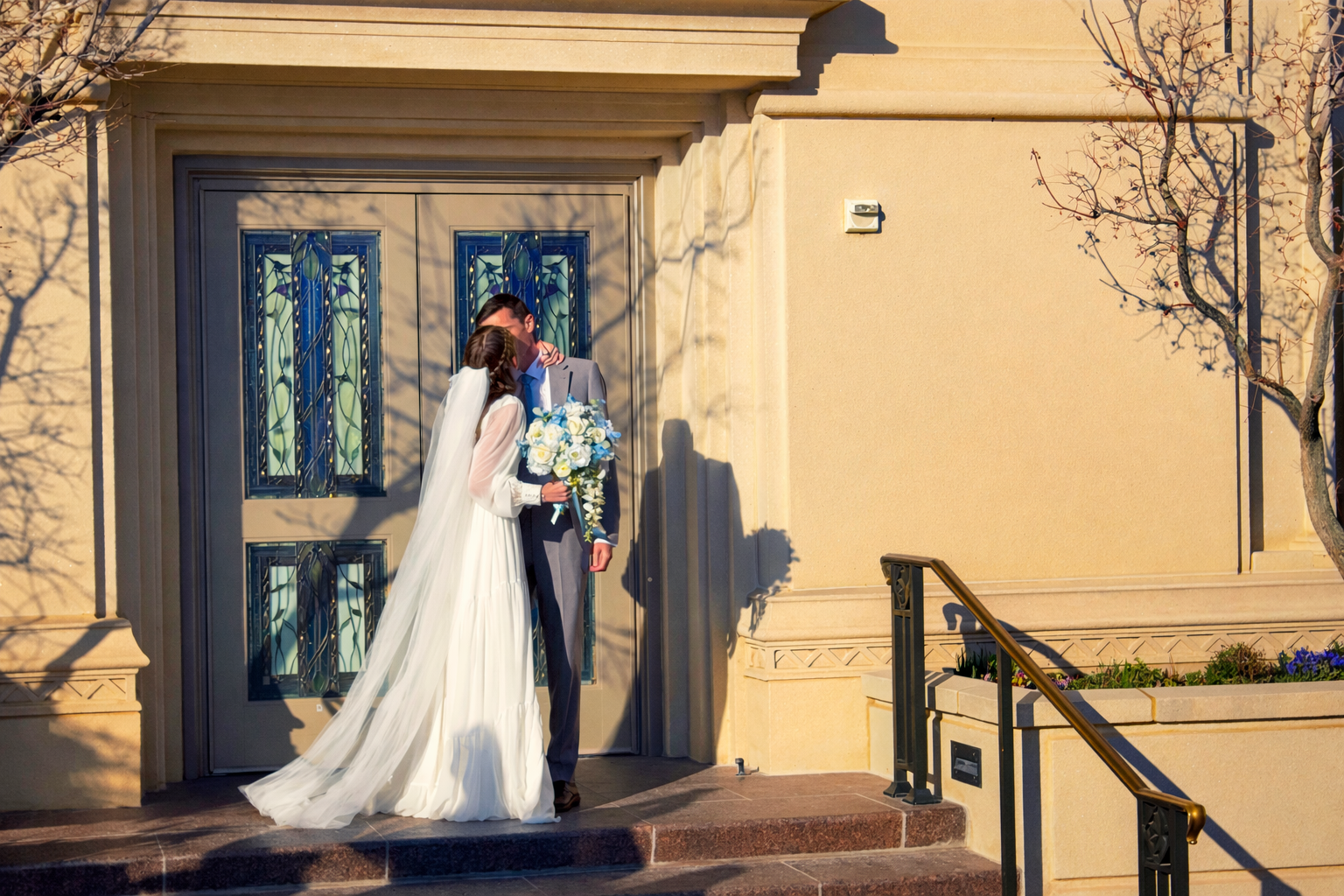
It is time to follow your dreams.
Part 6 of the Stability-Growth Paradox Series
Every transition invites you to evaluate: What's essential to who you are? What was just scaffolding for a season? The art of knowing what to carry forward and what to leave behind as you grow.
A few days ago, I was standing outside the church, watching my youngest son and his bride walk out into their new life together, and I felt two things at once:
A sweet, aching release—the caregiving relationship I've treasured for so long is shifting into something different.
And an unexpected surge of freedom—Now, more than ever before, it's time to follow my own dreams.
In just a few weeks, my husband retires from the military after three decades of service. We don't know yet if we're staying in Arizona or moving for his next chapter—that depends on what opportunities emerge. After twenty-plus moves, you'd think I'd be used to this uncertainty. But this time feels different.
Because this time, I'm not just asking where we're going.
I'm asking who I'm becoming—and what I need to carry with me into whatever comes next.
I've been releasing identities gradually over the last several years. "Just a mom" began slipping away when my youngest left for college. "Military spouse" has been loosening its grip as retirement approached and I poured more energy into Soul Force Strategies and leading Heroic Tucson. "People pleaser"—well, that one's taken longer, but it's finally losing its hold.
And now, with my son married and my husband's transition upon us, I'm face to face with the question again: What do I keep? What do I release?
This is the work of transitions. Not just the logistics of change, but the deeper evaluation.
The Scaffolding We Mistake for Structure
Here's what I'm learning: Some things we carry aren't actually part of us. They're scaffolding—temporary supports we needed to build something, but not the thing itself.
The problem is, we forget they're temporary. We hold onto them so long they start to feel essential. We build our identity around them. And then when circumstances change, we panic because we can't tell the difference between losing scaffolding and losing ourselves.
For years, I thought "just a mom" was who I was. Not what I did, but who I was. When my youngest left for college, I felt unmoored. What was my purpose now? Who was I if not the person managing schedules, cooking meals, solving problems, showing up at every game and event?
It took me longer than I'd like to admit to see it: The role was scaffolding. The capacity underneath—someone who nurtures growth, who creates space for others to become themselves, who shows up with fierce love—that's mine to keep. I just get to express it differently now.
Same with "military spouse." I wore that identity for three decades. It shaped how I moved through the world, how I built community, how I defined myself. But as my husband's retirement approached and I invested more in my own business and leadership work, I realized: The role was temporary. The actual structure underneath—someone who builds community wherever she lands, who helps people find their footing during transitions, who believes there's always a way to create meaning while starting over—that's portable. That travels with me.
I'm watching my husband wrestle with his own version of this right now. After thirty years as an impressive, impactful, much-loved and respected leader in the military, he's about to become... unknown. That's hard. Really hard. Because when you've built your identity around a role, losing the role can feel like losing yourself.
But what if the role was just scaffolding? What if the qualities that made him an exceptional leader—the wisdom, the integrity, the ability to inspire and guide—those aren't tied to rank or uniform? Those are his to carry forward, whatever comes next.
The work is learning to see the difference.
What Makes Something Essential?
I've noticed that when I'm trying to decide what to keep—whether it's a physical object, a habit, a belief, or a role—I ask the wrong questions first.
I ask: "Have I had this a long time?" (Not relevant.)
I ask: "Did this serve me well in the past?" (Also not relevant.)
I ask: "Will other people think less of me if I let this go?" (Definitely not relevant.)
The better questions are harder:
Does this still align with who I'm becoming?
Not who I was. Not who I think I should be. Who I'm actually becoming, in the life I'm actually building.
Does this give me energy or drain it?
Some things we carry out of obligation feel noble. But if they're quietly depleting us, they're not serving our growth—they're slowing it.
Is this mine to carry, or did someone else hand it to me?
We inherit so many beliefs, expectations, and roles without realizing they were never ours to begin with. Just because you've carried something a long time doesn't mean it belongs to you.
Does this work where I'm going, or only where I've been?
Some tools, habits, and identities are context-dependent. They worked beautifully in one season. They won't translate to the next. That's okay. That's not failure.
The Practice of Intentional Release
Letting go isn't passive. It's not just dropping things because you're tired or overwhelmed—though sometimes that happens too, and sometimes it's needed.
Intentional release is different. It's looking at something you value, something that served you, something you maybe even loved—and choosing to set it down anyway because you can see it's not meant for the next chapter.
That takes courage.
My releases haven't been dramatic or ceremonial. They've been gradual, almost quiet. A decision here, a shift there. Saying yes to opportunities that didn't fit the "just a mom" identity. Building a business that was mine, not just an extension of my husband's career. Leading Heroic Tucson in a way that claimed my own authority instead of deferring to others.
But I think there's value in making release more intentional, more conscious. Writing it down. Acknowledging what it gave you. Thanking it, genuinely. Then releasing it—maybe burning the paper, burying it, putting it in a drawer and closing it. The specific action matters less than the acknowledgment: This mattered. And now it's time.
I haven't done this with my own releases yet. But watching my husband navigate his transition, seeing how hard it is to let go of an identity you've held for thirty years—I'm thinking about how a ritual might help. How marking the moment might make space for what comes next.
Because the truth is, we honor what we name. And sometimes we need to name the ending before we can fully step into the beginning.
What You Always Keep
But here's the other side of this work, the part that matters just as much:
Some things aren't up for evaluation. Some things you keep, period. Not because they're comfortable or familiar, but because they're core.
These are your internal anchors—the values, capacities, and truths that remain stable regardless of what changes around you. They don't need to be updated or adapted. They ARE you.
For me, that list includes:
My commitment to showing up honestly, even when it's uncomfortable
My belief that everyone's story matters, including mine
My ability to build community and help people find meaning in transitions
My practice of building from the centerline—from that grounded, aligned place inside
My fierce commitment to nurture growth in others while finally claiming space for my own
Everything else? Negotiable.
And that's actually freeing. When you know what's essential, you can hold everything else more lightly. You can experiment. You can release what's not working without fearing you're losing yourself.
The roles I've released—"just a mom," "military spouse," "people pleaser"—those were never the core. They were containers for expressing the core. Now I get to find new containers: empty-nester who's following her own dreams, Heroic Tucson leader, Soul Force Strategies founder, coach who helps others navigate their own transitions.
Different expressions. Same essential self.
The Both/And of Transitions
The stability-growth paradox shows up here too.
You need enough continuity—enough of what you keep—to feel grounded through change. If you release everything at once, you lose your center. You can't grow from a place of chaos.
But you also need to create space—enough release—to allow for what's emerging. If you cling to everything familiar, there's no room for the new. You stay stuck.
The art is in the balance. Keep what grounds you. Release what's limiting you. And trust yourself to know the difference.
The Question I'm Sitting With
I still don't know if we're staying in Arizona or moving for Dave's next chapter. That depends on what opportunities emerge post-retirement.
But I'm asking a different question now.
Not "Where will I be?" but "Who am I becoming, and what does she need?"
And not in the abstract, but specifically: What do I need to carry forward into the life I'm actively choosing—wherever that life happens to be?
That question has an answer. It's revealing itself slowly, especially in moments like watching my son walk out of that church with his bride. In the freedom I felt. In the clarity that it's finally time to follow my own dreams without apology.
The scaffolding I've released—"just a mom," "military spouse," "people pleaser"—those were never the structure. They were temporary supports for building something deeper.
What remains is portable: my values, my capacity to create meaning, my commitment to help others find their footing while I find my own.
And maybe that's the real practice: Not forcing the answer. Not rushing the evaluation. But staying with the question long enough to hear what's true.
Trusting that what's essential will reveal itself. And that I'll have the courage to carry it forward—and the wisdom to leave the rest behind.
What are you carrying that you thought was essential, but might actually be scaffolding?
What do you know, bone-deep, that you'll never release—no matter what changes?
I'd love to hear what you're discovering.
This is part of an ongoing exploration of the Stability-Growth Paradox—the tension between needing enough groundedness to grow from and enough flexibility to grow into.
