
Building on Shifting Ground: When the Mice Turn Out to Be Raccoons
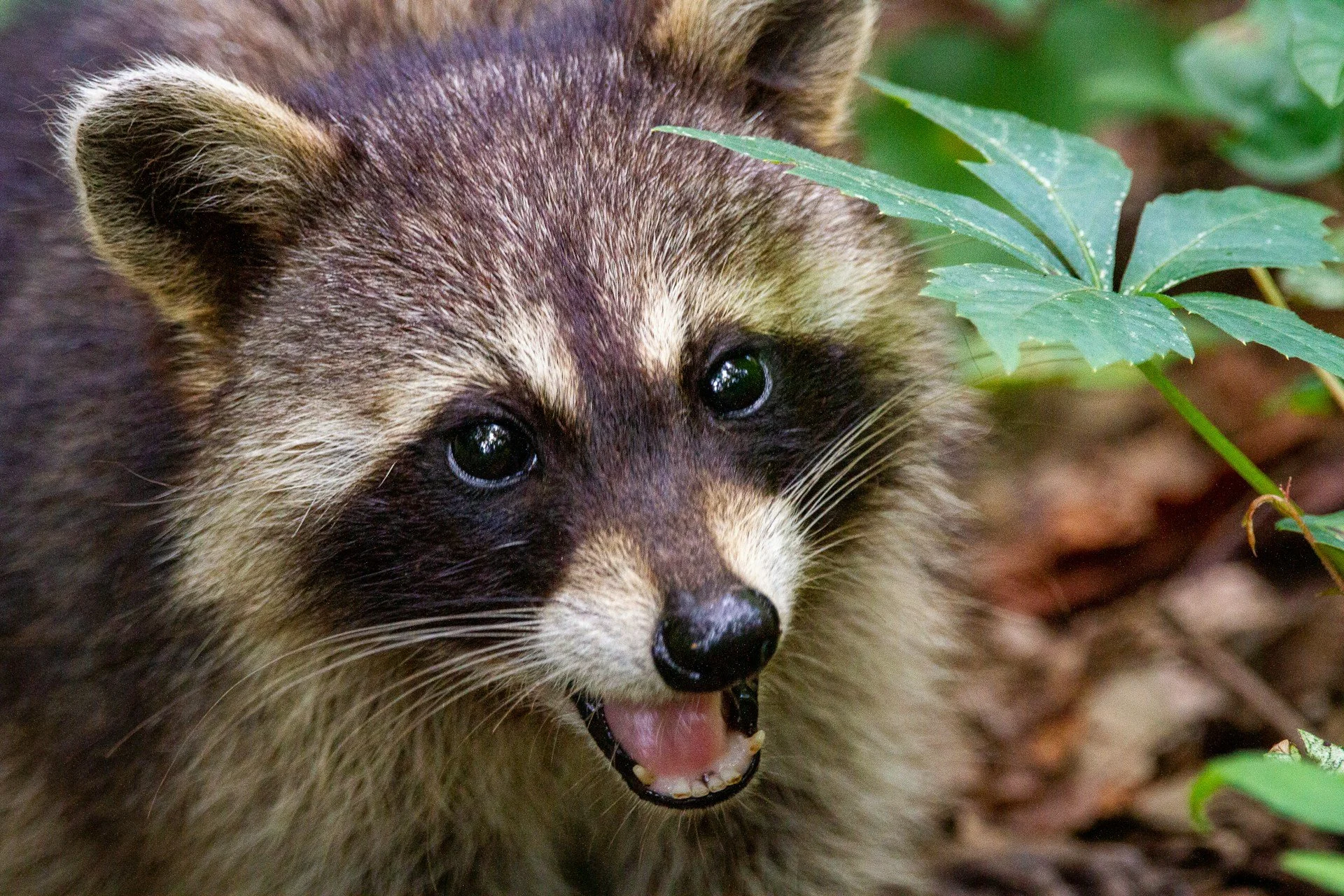
Turns out perspective shifts work both ways. At least they're not bears.
Part 4 of 7 in The Stability-Growth Paradox Series
I was going to write about how to build structure when everything around you is uncertain.
I had my examples ready. Like how I made peace with the scratching in my attic by discovering it wasn't rats—just mice. A perfect metaphor for perspective shifts and adjusting expectations.
I even wrote a whole blog about it.
And then this morning, the wildlife management guy gave us an update:
"So... it's not mice. It's raccoons."
[long pause]
You know what? This is perfect.
Because THIS is exactly what building on shifting ground looks like.
You think you've found your footing. You adjust your expectations. You apply your hard-won perspective. You make peace with the situation.
And then the situation changes again.
Welcome to my life right now—and maybe yours too.
When Everything Shifts at Once
Let me paint you the picture of the last few months:
Dave retires from the military after 30 years in a matter of weeks. No job offer yet. Complete uncertainty about where we'll land, what comes next, whether we stay or go.
So we can't buy. Can't build. Can't commit to anything permanent.
We move—again—for the 20th time. Into a rental. An older house with "character" (which is realtor-speak for "things will break").
Our first night? No heat. No hot water. We froze. (The gas company fixed it the next day, but that first night was... memorable.)
Also that first night? Scratching overhead. What I was convinced were roof rats turned out to be mice. Relief! Perspective shift! Growth!
Except now they're raccoons.
Meanwhile:
Our son is getting married
I'm building Soul Force Strategies
Leading Heroic Tucson
Dave is navigating retirement paperwork and medical documentation
The dishwasher broke before Thanksgiving
I tripped on the garage step and got a goose egg on my forehead that transitioned through every shade of purple, and weeks later I can still feel the bump
Work deadlines don't pause
Family complexities don't resolve themselves
Life keeps lifing
According to the Holmes & Rahe Stress Scale—the psychology tool that ranks the most stressful life events—I've checked nearly every box. Sometimes multiple boxes in the same week.
Major moves? Check.
Career upheaval? Check.
Housing instability? Check.
Financial uncertainty? Check.
Family transitions? Check.
Health challenges? Check.
Identity transformation? Check, check, check.
And what’s more: None of this is going to resolve itself quickly.
Dave's transition will take months to clarify. The house will keep having issues. The future remains uncertain. The stress isn't going anywhere.
So the question isn't "How do I make this stable?"
The question is: "How do I build structure when literally nothing around me is solid?"
The Illusion of External Stability
For most of my life, I built my sense of stability on external markers:
The house (until we moved again).
The routine (until deployment disrupted it).
The role (until the kids grew up and Dave's career shifted).
The plan (until life laughed and handed me raccoons).
After 20 moves, I've learned something essential: You cannot build lasting stability on anything external.
Not because external things don't matter—they do. A safe home matters. Financial security matters. Supportive relationships matter.
But they're not stable enough to be your foundation.
Because houses have mice. Or raccoons.
Jobs end. Roles shift. Bodies age.
Plans change. People move. Life disrupts.
If your stability depends on things staying the same, you're building on sand.
And when the ground shifts—which it always does—you go down with it.
Internal Anchors in External Chaos
So what do you do when literally nothing external is stable?
You build internal anchors. The kind that move with you. The kind that hold whether you have hot water or not, whether the future is clear or completely uncertain, whether the attic has mice or raccoons or a family of possums planning a hostile takeover.
Here's what that looks like for me—not in theory, but right now, in real time, while everything around me is chaos:
1. Identity First: The Foundation That Travels
My chosen identity—Antifragile—has become the ground I stand on.
Not "stay calm." Not "be positive." Not "figure it out."
Antifragile: I grow stronger through challenge. Stress doesn't break me—it builds me.
When I woke up to no heat that first night, my old self would have spiraled: Of course. Of COURSE this is happening. Nothing works. Everything is terrible.
My Antifragile self said: Okay. This is uncomfortable. What's the most Heroic thing I can do in the next 60 seconds?
Put on layers. Breathe. Call the gas company. Do the next right thing.
When the pest guy said "raccoons," my old self would have catastrophized: First mice, now RACCOONS? What's next—bears? Is the house even safe? Should we move AGAIN?
My Antifragile self laughed and thought: Of course it's raccoons. This is who I'm becoming—someone who can handle raccoons.
Identity doesn't remove the chaos.
But it changes the question from "Why is this happening?" to "Who do I choose to be in this moment?"
And that shift changes everything.
2. Protocols Over Circumstances
Here's what Brian Johnson taught me through Heroic: The worse you feel, the more committed you need to be to your protocols.
My protocols—the non-negotiables I do regardless of circumstances—are what keep me grounded when everything else is uncertain.
Even when I'm exhausted.
Even when the house is falling apart.
Even when I don't know where we'll be in six months.
I still:
Breathe (conscious, intentional breathing to calm my nervous system)
Move my body (even just a walk—it shifts everything)
Get sunlight (preferably first thing in the morning)
Hydrate (sounds basic, but it matters)
Journal (to process, reflect, and gain perspective)
Hit my targets (the daily disciplines I've committed to)
Practice gratitude (actively looking for what's working)
Meditate or pray (to reconnect to something bigger than the chaos)
Remind myself of my values (who I want to be, not just what I want to do)
Do the next right thing (W.I.N.—What's Important Now)
These aren't luxury practices I do when life is calm.
These are the anchors that hold me steady when life is chaos.
My circumstances didn't improve because I did these things.
But my capacity dramatically did.
3. W.I.N. – What's Important Now
When life piles on, the mind wants to spin into catastrophizing.
How am I going to handle the wedding AND the retirement AND the business AND the move AND the raccoons AND...
Stop.
Heroic taught me the discipline of micro-decisions.
Not, "How am I going to survive the next six months?"
But, "What's the most Heroic thing I can do in the next 60 seconds?"
Answer the email.
Make the call.
Take the breath.
Show up for the conversation.
Say yes to the opportunity.
Do the next right thing.
One micro-decision at a time.
One moment at a time.
One choice at a time.
That's how you build on shifting ground. Not by controlling the future, but by mastering the present moment.
4. Perspective: Rats, Mice, and Raccoons
My son gave me an unexpected gift when he said, "Mom, that's a mice problem."
He wasn't talking about the attic. He was talking about a completely different situation that felt overwhelming in the moment.
And it landed: Perspective changes everything.
Not because the challenges shrink. But because their weight shifts when we see them clearly.
A "rat problem" becomes a "mice problem."
An obstacle becomes an inconvenience.
A crisis becomes... well, sometimes still a crisis, but one you can handle.
Now when something goes wrong, I pause and ask:
Is this a rat, a mouse, or a raccoon? (How big is this really?)
Is this permanent or temporary? (Will this matter in a week? A month? A year?)
What's the lesson here? (How is this shaping me?)
Where's the opportunity? (What can I learn? Who can I become?)
Raccoons in the attic? Annoying. Disruptive. Temporarily stressful.
But also? Temporary. Solvable. And honestly, kind of hilarious.
If I can laugh at raccoons while navigating retirement and a 20th move and my son's wedding and launching a business...
I can handle anything.
5. What to Hold vs. What to Release
Here's the hard truth: You can't anchor to everything.
Some things need to be protected. Some things need to be released.
The art is knowing the difference.
What I've learned to hold:
My identity (who I choose to be regardless of circumstances)
My protocols (the practices that ground me)
My values (the principles that guide my choices)
Key relationships (the people who matter most)
My purpose (the work that aligns with my soul)
What I've learned to release:
The perfect house (it doesn't exist—and raccoons don't care)
The perfect plan (life will disrupt it anyway)
Control over outcomes (I can control my response, not the results)
Other people's expectations (of who I should be or how I should handle things)
The timeline (things unfold in their own time, not mine)
Releasing doesn't mean not caring.
It means not anchoring my stability to things I can't control.
6. Building Structure Lightly
The key isn't to build rigid structure that shatters when life shifts.
It's to build flexible structure that moves with you.
Think of it like this:
Rigid structure says: "I need this house to be perfect. I need this plan to work exactly as designed. I need certainty before I can move forward."
Flexible structure says: "I need practices that ground me wherever I am. I need principles that guide me through uncertainty. I need an identity that holds regardless of circumstances."
Rigid structure breaks when life disrupts it.
Flexible structure bends, adapts, and grows stronger.
I can't control whether we have heat on our first night.
But I can control whether I breathe, move my body, and choose my response.
I can't control whether the attic has mice or raccoons.
But I can control whether I catastrophize or laugh.
I can't control Dave's retirement timeline or job offers.
But I can control whether I show up as my Antifragile self or my anxious self.
That's the structure I'm building. Not one that depends on external stability, but one that creates internal stability regardless of what's happening around me.
The Truth About Building on Shifting Ground
Here's what I've learned in the middle of all this chaos:
You never "arrive."
You don't build your structure once and then you're done. Life keeps shifting. Circumstances keep changing. Mice turn into raccoons. Plans change. Bodies age. Relationships evolve.
The ground never stops moving.
But here's the gift: Each time you practice building on shifting ground, you get better at it.
Your capacity increases.
Your resilience deepens.
Your faith strengthens.
Your identity solidifies.
Not because life gets easier. But because you get stronger.
This move—the 20th one—is easier than the 10th one was. Not because moving is easier, but because I've built the internal structure that travels with me.
This uncertainty about the future is less destabilizing than past uncertainties. Not because I have more control, but because I've practiced staying grounded in the present moment.
These raccoons are less overwhelming than the mice felt at first. Not because they're actually smaller (they're definitely not), but because I've learned to shift my perspective.
Building on shifting ground isn't about making the ground stop shifting.
It's about becoming the kind of person who can stand steady while it shifts.
Your Turn: Building Your Own Internal Anchors
Maybe you're navigating your own version of chaos right now.
A job that's uncertain. A relationship that's shifting. A health challenge. A transition. A loss. A future that feels completely unclear.
Maybe you keep trying to find stable ground—and it keeps moving.
Here's what I want you to know: The ground is supposed to move.
That's not a flaw in your life. That's not a sign you're doing something wrong.
That's just... life.
The question isn't "How do I make things stable?"
The question is: "How do I build internal anchors that hold regardless of external chaos?"
Start here:
1. Choose your identity.
Who do you want to be when life gets hard? Not what you want to do—who you want to be. Name it. Claim it. Live from it.
2. Establish your protocols.
What are the non-negotiables that ground you? What practices keep you steady? Commit to them—especially when life is chaos.
3. Practice W.I.N.
When you feel overwhelmed, ask: "What's the most important thing I can do right now—in the next 60 seconds?" Do that. Then ask again.
4. Shift your perspective.
Is this a rat, a mouse, or a raccoon? Is this permanent or temporary? What's the lesson? Where's the growth?
5. Know what to hold and what to release.
What truly grounds you? Protect that. What are you trying to control that you can't? Release that.
6. Build lightly.
Create structure that flexes rather than shatters. Build anchors that move with you.
This isn't theory. This is what's holding me steady right now—in the middle of retirement, a 20th move, a rental with raccoons in the attic, my son's wedding, a business launch, and a future that's completely uncertain.
I don't have all the answers.
I don't have perfect circumstances.
I still have raccoons in my attic.
But I have me.
The version of me I've been becoming through all of this.
The Antifragile version. The grounded version. The one who can handle raccoons.
And that's the only anchor I need.
Next in the series: The Growth Trap—When the Pursuit of Becoming Becomes Exhausting Performance
What about you? What internal anchors are you building? What practices keep you grounded when everything else is chaos? I'd love to hear what's working for you.
